

ovarian-cancer deaths each year in Lombardy
research & clinical partners in the consortium
predictions delivered at diagnosis, before therapy
Why PREDICT
Ovarian cancer is often diagnosed late, and the delay between detection and the right therapeutic decision costs lives — roughly 500 deaths each year in Lombardy alone, a substantial share of them tied to diagnostic and decision-making delays.
PREDICT leverages generative artificial intelligence to support the clinicians who care for these patients. From the CT scan acquired at diagnosis, the project generates the likely post-chemotherapy CT, anticipates how the tumor will progress, and predicts treatment response — all before therapy begins.
By moving this insight forward to diagnosis time, PREDICT aims to enable more precise, individualised care strategies that reduce both unnecessary surgery and mortality.
Three capabilities
A single baseline CT feeds three generative and predictive tasks, each surfacing information that is normally only available after treatment.
Generate
Generative models synthesise the post-chemotherapy CT scan directly from the baseline scan acquired at diagnosis — visualising the likely effect of treatment before it begins.
Forecast
From a single baseline CT and clinical data, the models anticipate how the disease is likely to progress, giving clinicians a forward view of the patient's trajectory.
Predict
Treatment response is estimated up front, supporting earlier, more personalised decisions between surgical and chemotherapy-first strategies.
From noise to anatomy
Generative synthesis, fidelity checks against acquired scans, and automated segmentation form the imaging pipeline behind PREDICT.
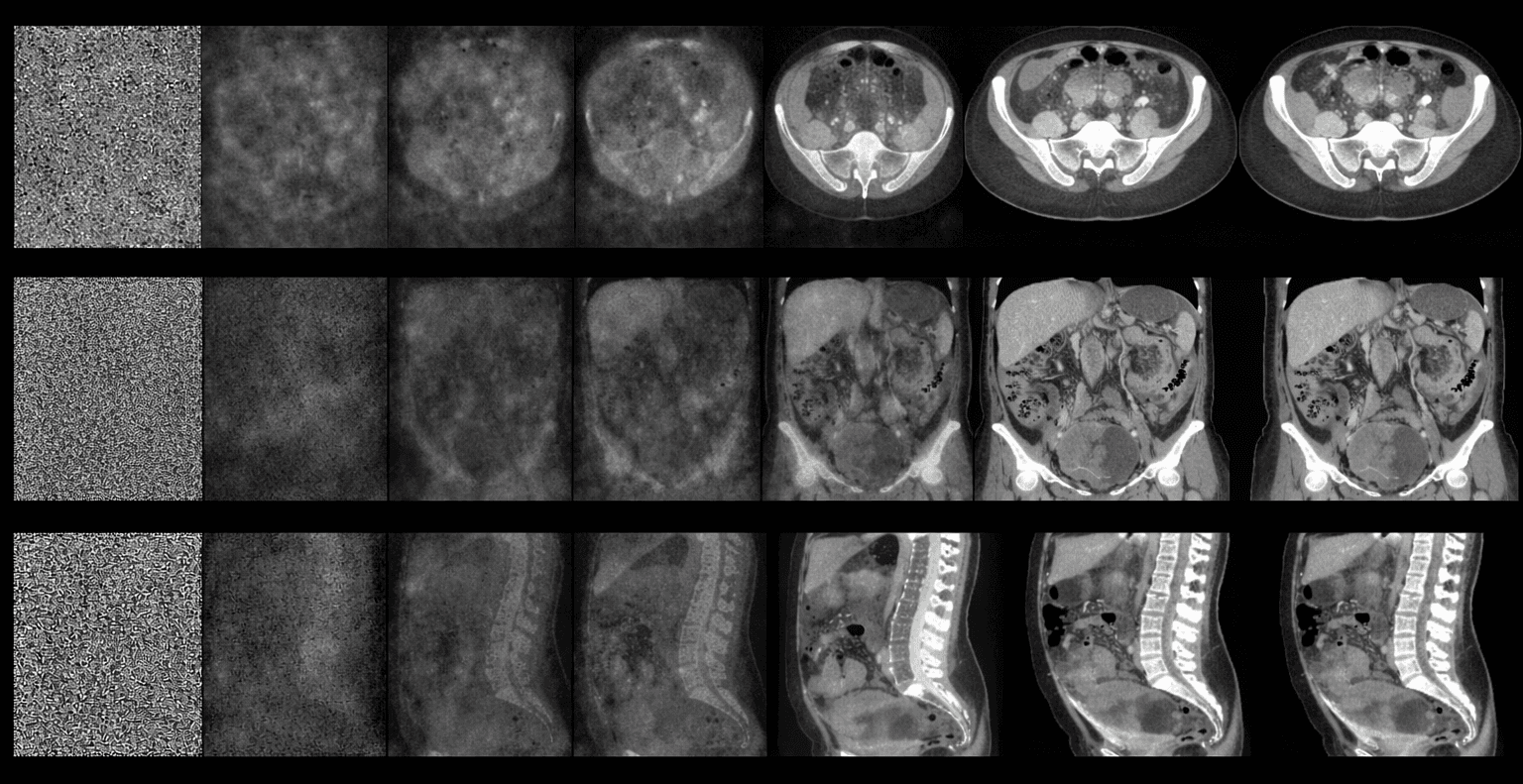
A diffusion process denoises pure noise into anatomically coherent CT slices across axial, coronal and sagittal views — the engine behind synthesising follow-up imaging at diagnosis.
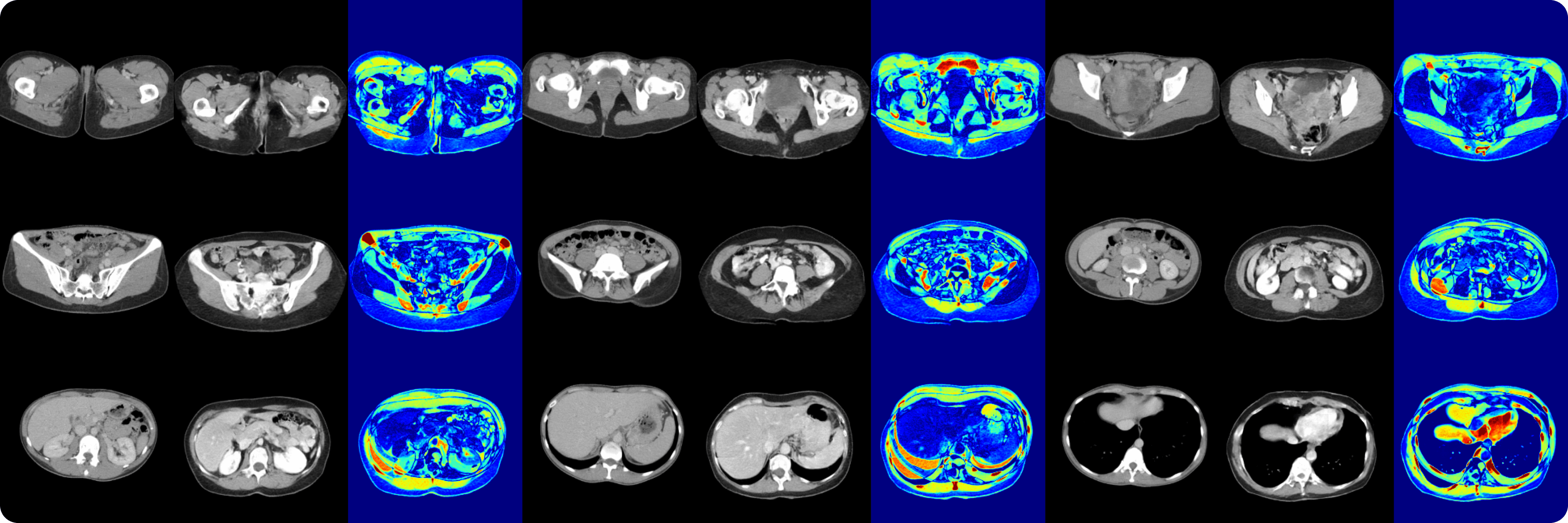
Side-by-side comparison of acquired and AI-generated CT with per-voxel difference maps, used to quantify how faithfully the model reproduces patient anatomy.
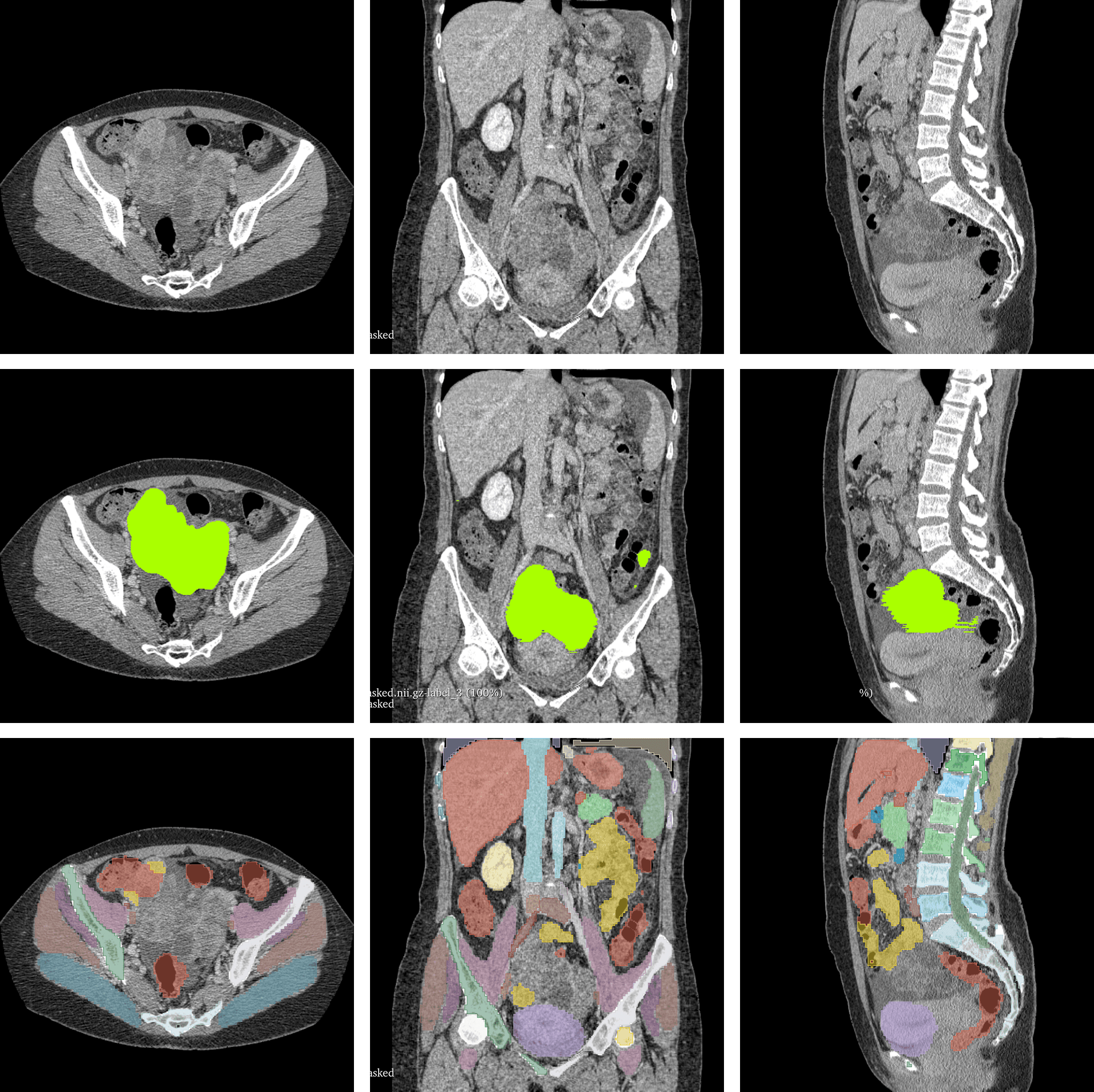
Automated delineation of tumor burden (green) and surrounding abdominal organs across the CT volume — the structured substrate for progression and response modelling.
Partners & people
A three-partner collaboration bridging engineering and oncology.
Politecnico di Milano
NEARLab · Milan, IT
Istituto Europeo di Oncologia (IEO)
Milan, IT
Università degli Studi dell'Insubria
Varese, IT
Funding
- Funder
- Fondazione Regionale per la Ricerca Biomedica (FRRB)
- Programme
- Regione Lombardia
- Project ID
- 012024R0055 — PREDICT

Anticipating ovarian cancer, one scan ahead.
Learn more about the methods, the team and ongoing results on the official project page.
Visit the PREDICT project site